Raw Material Procurement for Caterers: Buy Better Before You Cook Better
Mahipal, Founder, CaterCaptain · Jul 06, 2026 · 3 min read
The Idea Behind CaterCaptain
Most software for caterers is built far from any actual kitchen - global products that assume drop-off catering and card payments, or generic restaurant POS stretched over an industry it doesn't understand. We took the opposite bet: build deep for one place first. Here's the reasoning, openly.
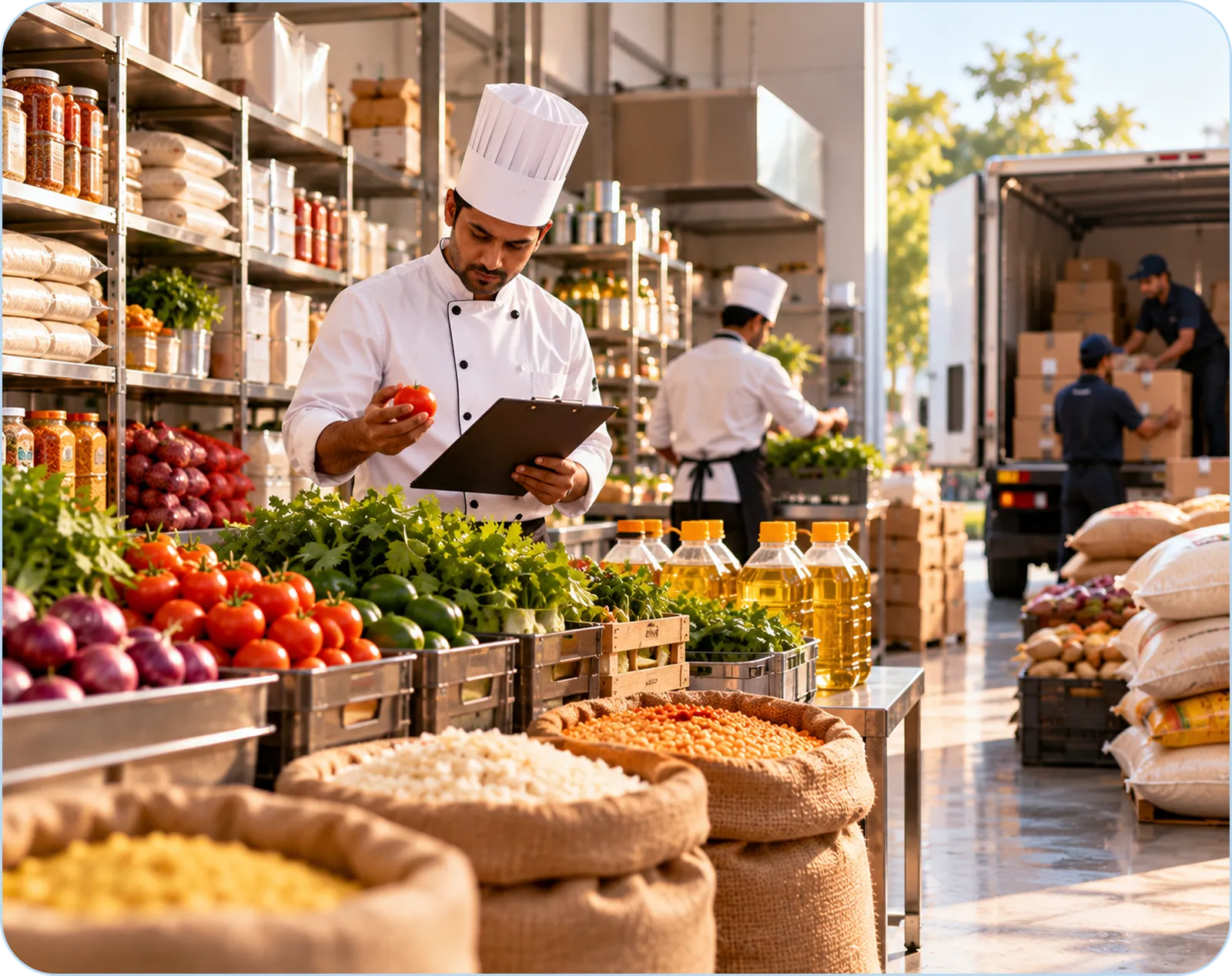
Kitchens get the glory, but procurement quietly decides your margin before the first flame lights. A caterer buying 3–5% better than the neighbour - on the same volume, same menu - pockets the difference as pure profit. Here's how disciplined buying actually looks.
How should caterers organise their vendors?
- Tier 1 - rate-contract partners (2–3): your staples volume (oil, ghee, flour, rice, dal, sugar) at negotiated monthly/seasonal rates. They get predictable volume; you get predictable prices and priority in shortages.
- Tier 2 - market specialists: vegetables, dairy, specialty items bought on freshness and daily rate - with two competing options per category so no one owns you.
- Tier 3 - emergency network: the vendors who answer at 7 AM on event day. You pay their premium rarely, but you keep the relationship warm, because that phone call will come.
The buying calendar
Buy staples on a rhythm (weekly/fortnightly, against rate contracts), event-specific dry goods at T-5 to T-3, and perishables by freshness window - leafy at T-1/T-0, dairy per event morning where possible. Random buying is expensive buying: rushed purchases cluster at market peaks and premium vendors.
Receiving is where money leaks or doesn't
- Weigh, don't trust: a 25 kg bag is a claim; your scale gives a fact. Even honest vendors' errors run 1–2% - always in one direction.
- Quality check before acceptance: oil clarity, grain quality, vegetable condition - rejection at the gate is cheap, discovery in the kadhai is not.
- Record on receipt: item, quantity, rate, vendor, batch/date. This entry is the foundation of every downstream number - stock, dispatch, consumption, costing.
Stock records: theft-proofing without accusations
Most inventory shrinkage isn't dramatic theft - it's unmeasured leakage that unmeasured systems invite. The fix is impersonal: everything in by record, everything out by record (to events, to kitchens), monthly physical count vs book stock. Where counts and books diverge repeatedly, you have a category to investigate, not a person to accuse. Visibility disciplines everyone, including vendors.
The 80/20 of catering procurement: ten SKUs - oil, ghee, flour, rice, two dals, sugar, paneer, milk, dry fruits - typically carry 70%+ of material spend. Negotiate those ten like your margin depends on it, because it does.