Packaging and Delivery Orders: The Growing Side-Business Inside Your Catering Kitchen
Mahipal, Founder, CaterCaptain · Aug 14, 2026 · 3 min read
The Idea Behind CaterCaptain
Most software for caterers is built far from any actual kitchen - global products that assume drop-off catering and card payments, or generic restaurant POS stretched over an industry it doesn't understand. We took the opposite bet: build deep for one place first. Here's the reasoning, openly.
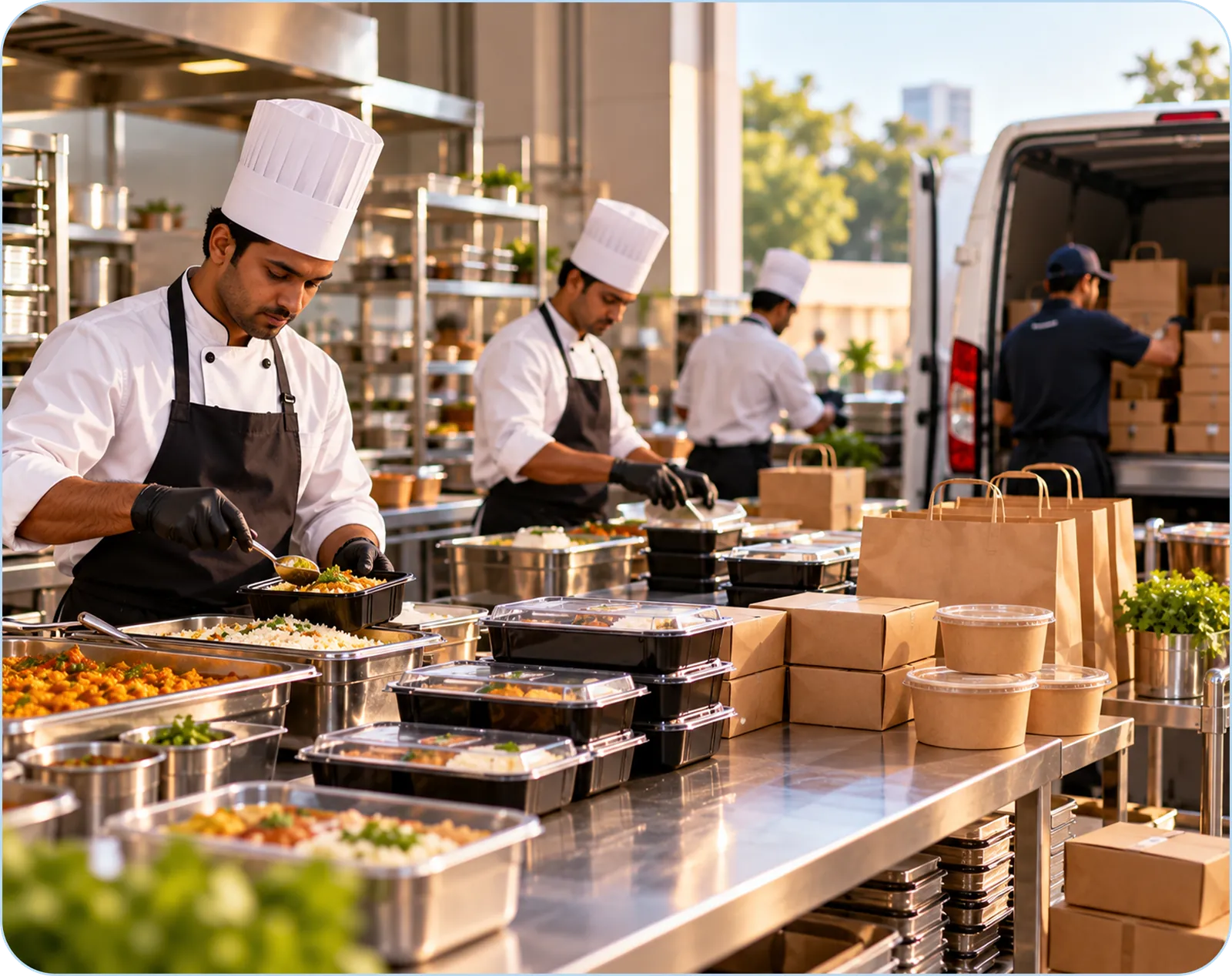
Somewhere between full-service events and doing nothing sits a quietly growing revenue line: packed orders. Corporate box lunches, festival hampers, society function deliveries, bulk pooja meals - no service staff, no venue kitchen, just your production capacity monetised on otherwise-idle days. Run casually it's pocket money; run properly it's a second business inside your first.
How do you price packed catering orders?
Packed orders trade service costs for packaging and delivery costs. A ₹120 box meal might carry ₹14–₹22 of packaging (container, lid, bag, branding) and ₹8–₹15 of delivery allocation - cost lines that don't exist in your event mental model and quietly erase margin when priced by instinct. Cost the box as its own product: food + packaging + delivery + labour share + overhead share, then margin. The discipline is identical to per-plate costing; only the components change.
Packaging is product design
- Travel-test your menu: a dish that plates beautifully may arrive as soup. Gravies medium-thick, fried items vented (sealed steam = sogginess), sweets separated from hot mains. One test delivery to your own house teaches more than any theory.
- Leak-proofing is reputation: the client remembers one stained car seat longer than ten good meals. Spend the extra rupee on lid quality; it's marketing.
- Brand the box: a simple sticker with name and number turns every delivered order into an advertisement that sits on someone's desk at lunch - the cheapest visibility in the business.
Delivery windows: promise what operations can keep
Events forgive minutes; deliveries don't. Structure delivery commitments as windows ("12:15–12:45") not points, route multi-drop runs geographically before quoting times, and record promised-vs-actual per order. Corporate lunch clients churn on reliability, not on taste - the caterer who's boringly on time owns the account.
Quality holding: the hot-food clock
Packed food lives in the gap between your kitchen and their table. Pack as close to dispatch as production allows, insulate transport for anything beyond 30 minutes, and design box menus around dishes that hold gracefully - biryanis, dal-rice combinations, thepla-shaak - rather than items that peak for ten minutes. The menu that travels well is your quality control.
The scheduling gift: packed orders concentrate on weekday lunches and festival dates - almost perfectly complementary to weekend event load. Tracked as its own line with its own costing, this side-business smooths the revenue curve that makes catering cash flow so seasonal.