Buffet vs Sit-Down Service: Planning, Staffing and Costing the Difference
Mahipal, Founder, CaterCaptain · Aug 5, 2026 · 3 min read
The Idea Behind CaterCaptain
Most software for caterers is built far from any actual kitchen - global products that assume drop-off catering and card payments, or generic restaurant POS stretched over an industry it doesn't understand. We took the opposite bet: build deep for one place first. Here's the reasoning, openly.
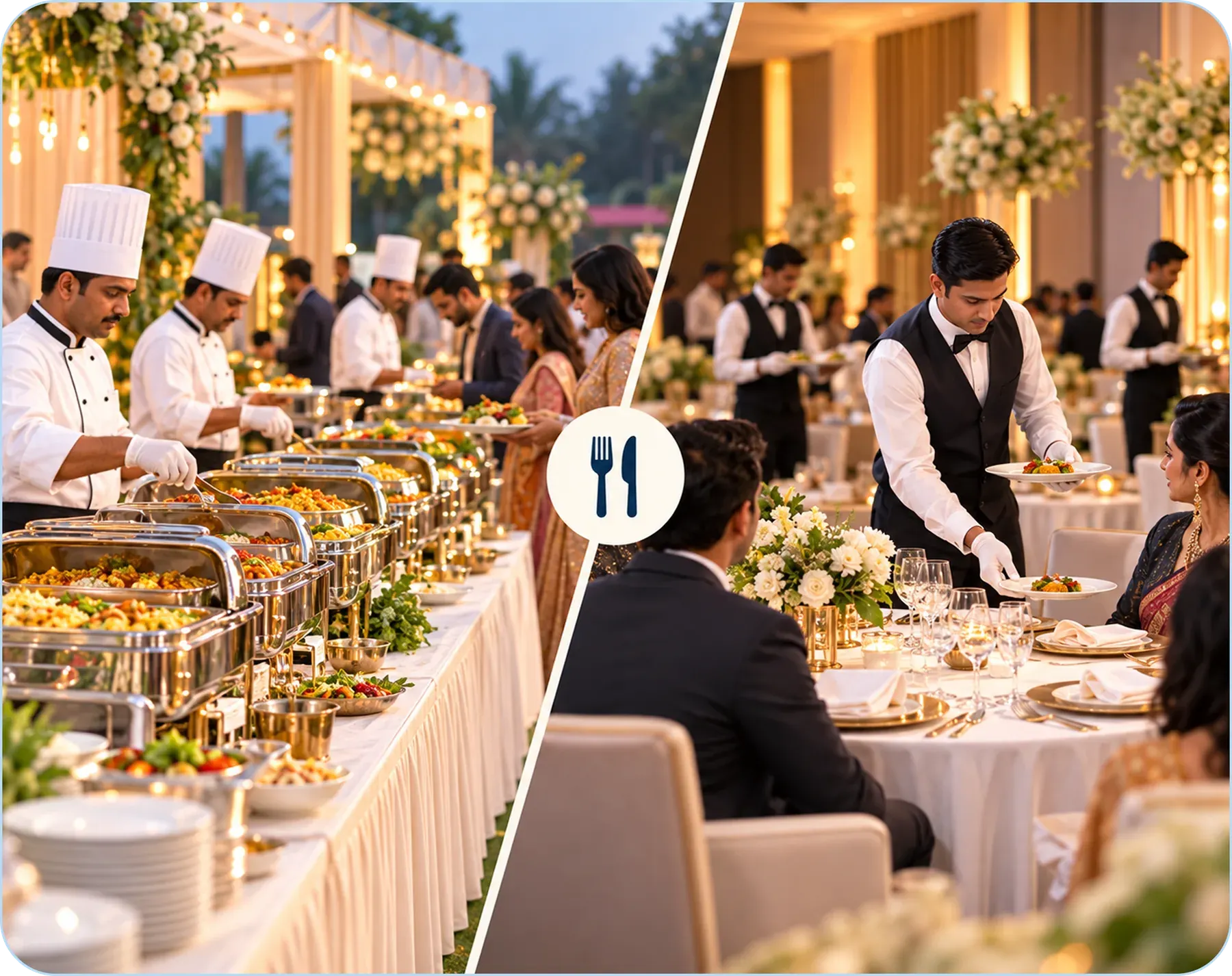
"Buffet rakhvu ke pirasvanu?" - the client asks it as a style question; for the caterer it's an operations question that changes staffing, quantities, equipment and cost by 20–40%. Quoting both at the same per-plate rate, as many caterers reflexively do, means one of the two formats is silently subsidising the other.
Does buffet or sit-down service need more food?
Buffets consume differently than served meals: guests self-serve generously on visible premium items and skip anchors, so buffet planning needs 8–12% more on signature and premium dishes while served pangat-style meals, portion-controlled by your staff, run closer to plan on every item. Meanwhile sit-down service produces more per-plate waste (served-but-uneaten) where buffets concentrate waste in tray-ends. Neither is "cheaper on food" universally - but they're differently shaped, and your quantity sheets should reflect the format, not a single average.
Staffing flips between formats
- Buffet: lighter on servers (1 per 40–50 guests for clearing and assistance), heavier on counter staff and live stations, plus dedicated replenishment runners between kitchen and line. The choke point is the line itself - under-replenished counters create the queues guests remember.
- Sit-down/pangat: server-heavy (1 per 25–30 guests, and richer for traditional multi-round serving), with tighter kitchen-to-floor coordination since every course fires for everyone at once. The choke point is timing - a slow second round is visible to the entire hall simultaneously.
Equipment and layout cost real money
Buffets need chafing dishes, fuel, counter infrastructure, décor for the line and often rented tables - commonly ₹15–₹30 per plate in equipment-and-setup equivalent. Pangat needs volume serving vessels, more crockery in circulation (rounds of refills), and floor-plan cooperation from the venue. These aren't the same cost line, and your quotation's "other costs" section should show which one the client is buying.
Pricing the formats honestly
Cost each format's true profile - quantities, staff count at real rates, equipment - and let the per-plate rates differ where they genuinely differ. Present it to clients as service-style options with transparent pricing ("buffet with two live counters: ₹X; traditional served: ₹Y") rather than absorbing the swing. Clients respect the clarity; your margin respects you back.
The hybrid rising: Gujarat's current sweet spot is served starters and sweets with a buffet main - pangat warmth where it's felt most, buffet efficiency where it saves most. Cost it as the hybrid it is: server-medium, counter-medium, and price accordingly.