Monsoon Event Catering in Gujarat: Protecting Food, Schedules and Margins
Mahipal, Founder, CaterCaptain · Jul 15, 2026 · 3 min read
The Idea Behind CaterCaptain
Most software for caterers is built far from any actual kitchen - global products that assume drop-off catering and card payments, or generic restaurant POS stretched over an industry it doesn't understand. We took the opposite bet: build deep for one place first. Here's the reasoning, openly.
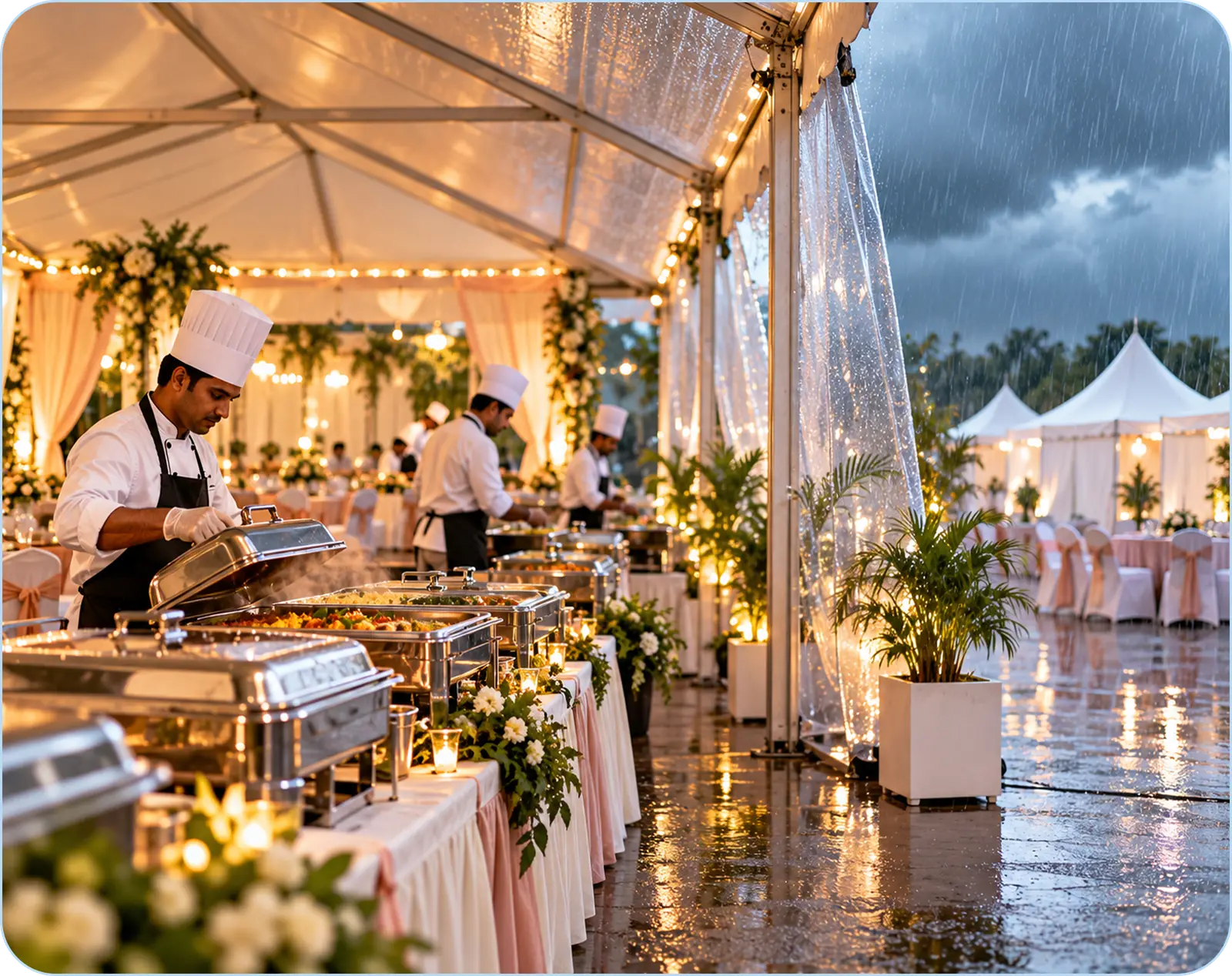
Monsoon events are where caterers earn their reputation the hard way. Humidity attacks ingredients, rain attacks schedules, and venues attack assumptions. The caterers who cruise through July–September aren't lucky - they've adjusted five specific things.
How should caterers handle ingredients in monsoon?
- Flour, besan, spices: humidity clumps and spoils faster - buy shorter cycles (weekly, not monthly), store airtight and elevated, rotate strictly first-in-first-out.
- Dairy and paneer: the monsoon danger zone. Tighten the cold chain: purchase closest to use, insulated transport, no ambient holding. One dahi incident in August costs a season of reputation.
- Fried items and farsan: lose crispness in hours. Fry latest, hold in warmers, and portion-replenish counters instead of loading trays that go soft in the open air.
- Leafy vegetables: monsoon quality is erratic - inspect harder at receiving, and design menus leaning on hardier produce.
2. Transport gets buffers, not hope
City waterlogging turns a 40-minute dispatch into two hours. Monsoon protocol: dispatch 60–90 minutes earlier than dry-season timing, waterproof covering as standard loading practice (tarps cost hundreds; a soaked flour sack costs an event), and the driver's mobile recorded on every dispatch so "gaadi kya che?" has an answer.
3. Venue contingencies in writing
Outdoor and lawn events need the rain conversation at booking, not at 4 PM under clouds: what's the covered fallback, who decides the shift and by when, and what re-setup labour costs if the layout moves. Caterers who raise this early look professional; those who improvise absorb the cost and the blame.
4. Menu engineering for the season
Lean into monsoon-right crowd-pleasers - hot jalebi, bhajiya live counters, soups, masala chai stations - which are cheaper to run than delicate cold items are to protect. Reduce open-air cold desserts and cut-fruit displays; they're food-safety liabilities in 85% humidity.
5. Price the season honestly
Monsoon events carry real extra cost: covered transport, warmers and fuel, buffer staff hours, contingency setups. A 5–8% seasonal loading - explained openly as monsoon-protection cost - is accepted by reasonable clients far more readily than caterers fear. Absorbing it silently is choosing thinner margin on the year's riskiest events.
The monsoon test of systems: when timings compress and plans shift hourly, teams running on written dispatch lists and one source of truth adapt in minutes. Teams running on memory and calls discover exactly how fragile memory is in the rain.