Festival Season Catering: Navratri to Diwali Without Operational Meltdown
Mahipal, Founder, CaterCaptain · Aug 03, 2026 · 3 min read
The Idea Behind CaterCaptain
Most software for caterers is built far from any actual kitchen - global products that assume drop-off catering and card payments, or generic restaurant POS stretched over an industry it doesn't understand. We took the opposite bet: build deep for one place first. Here's the reasoning, openly.
Gujarat's festival stretch - Rakhi through Navratri to Diwali - is a different operational animal from wedding season. Weddings are few, large and planned; festivals are many, small and simultaneous. The caterer built only for weddings gets shredded by forty parallel sweet orders and nine nights of garba catering. Here's how the operating model shifts.
How do caterers manage many festival orders at once?
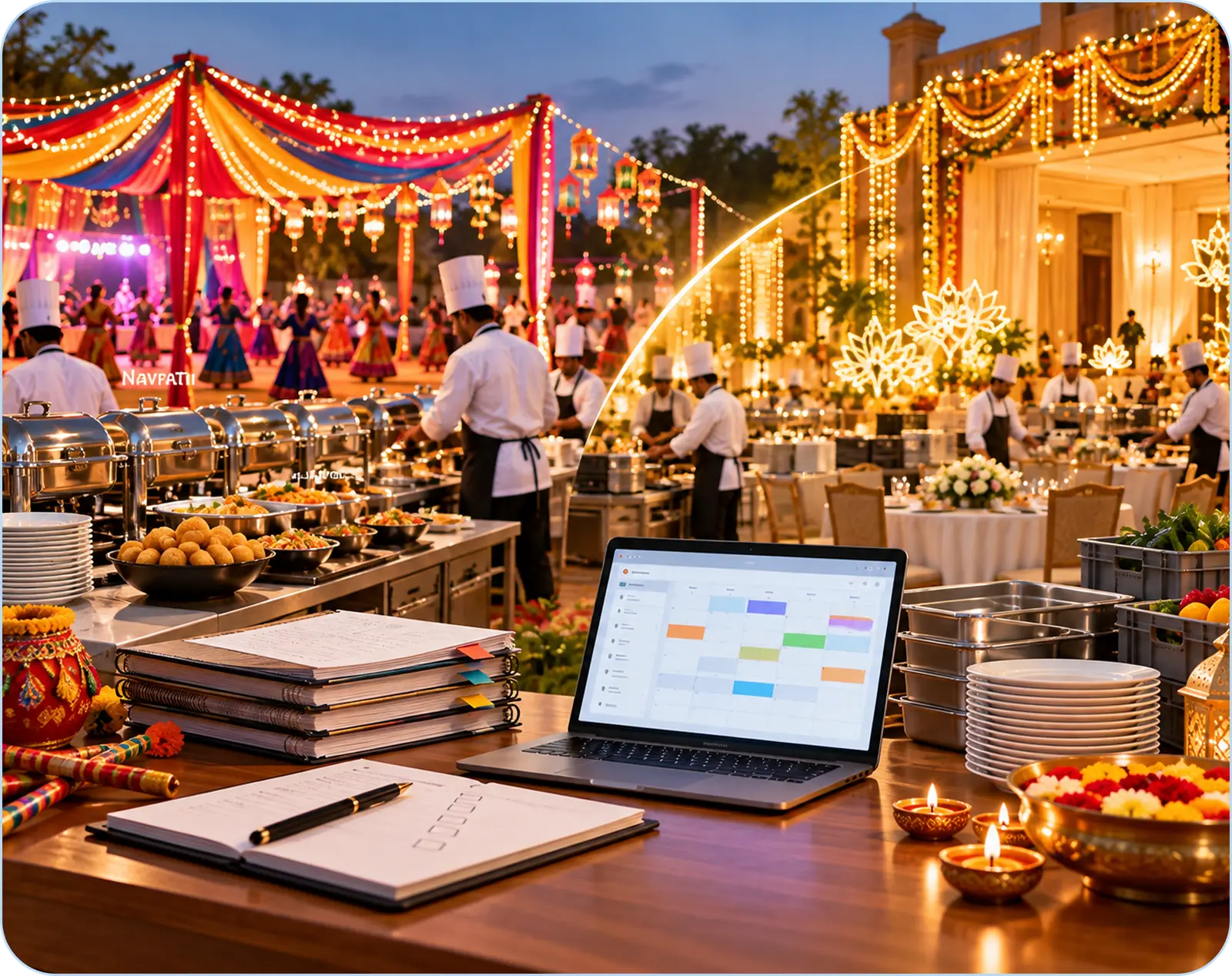
Festival demand arrives as volume of orders, not volume of plates: corporate Diwali hampers, society Navratri dinners, family chandlo functions - dozens of commitments sharing the same kitchens and the same week. The wedding-era method (one event file, one dispatch, held in one head) collapses here; what holds is a daily production board: every order, its items, quantities, delivery time and status, visible in one place. Whether that's a wall chart or a screen, the discipline is identical - no order exists only in a phone call.
Sweet production: scale with rules, not heroics
- Shelf-life sequencing: produce long-holding sweets (dry-fruit items, some barfis) early in the week; short-life items (milk sweets, jalebi) closest to delivery. The sequence, written and followed, is what lets volume triple without quality collapsing.
- Batch records: festival volume means multiple batches daily - date-marking batches is your protection when one complaint arrives and you need to know its blast radius.
- Premium ingredient locks: ghee, mawa and dry-fruit prices spike into Diwali predictably. August rate-contracts on these are among the highest-ROI purchasing decisions of the year.
Navratri nights: nine-day endurance design
Garba catering is late-night, repetitive and staff-punishing. Design for endurance: rotate teams across nights rather than running one crew into the ground, pre-portion the standard menu (the nightly repetition is an efficiency gift - use it), and lock transport for the 11 PM–2 AM window when vehicles are scarcest.
The staff-festival collision
Your busiest weeks are also your team's own festivals - the structural tension of the season. Handle it in September, not mid-Navratri: publish the leave calendar early, pay explicit festival-duty premiums for the critical dates, and rotate so everyone gets some family time. Teams that feel the fairness show up; teams that feel captive quietly shrink exactly when you need them most.
The festival-season metric: on-time delivery rate. Weddings forgive a 20-minute delay; a Diwali hamper that misses the office party doesn't exist. Track every order's promised-vs-actual time for one season - the pattern tells you precisely where your operation needs reinforcement before next year.